Contamination
About Volatile Organic Compounds
Are you concerned about the drinking water in Kalamazoo?
Learn more about Kalamazoo water facts and how you can help, or call us with any questions at (269) 337-8583.
Unfortunately, Kalamazoo has had detectable levels of volatile organic compounds (VOCs) contamination in five of its 19 wellfields. The first detection was in 1980 at Water Pumping Station (WPS) 1 (Central Wellfield), located in the Crosstown Parkway Ponds area. In 1995, the wellfield was renovated to include two air strippers to remove the VOCs, iron removal filters and six new high capacity wells. The total cost of the project was approximately $7 million.
WPS 1 is the largest water treatment plant in Michigan to treat contaminated water and re-use it as drinking water. The first station in Michigan to use air strippers to remove VOCs and reuse the water for drinking water was WPS 11. VOCs were first detected there in 1981 and the facility was renovated in 1989 at a cost of approximately $2 million. In addition, three other wellfields have had low detections of VOCs but well below maximum contaminant levels, not warranting treatment.
The City continues to monitor selected sites which pose potential threats to its wellfields. For example, in the Spring of 1997, a gasoline spill from an above-ground storage facility threatened WPS 5, located on East Michigan Avenue. This resulted in a cooperative investigation with the MDEQ and remediation of the fuel. Wellfield 7, located at Crosstown Parkway and Park Street, had low levels of VOCs detected in two wells that resulted in an on-going cooperative site remediation of a former gasoline service station.

Henry the Water Drop Says:
Use fertilizers, pesticides and herbicides wisely. Also, seek alternative uses to chemicals by carefully selecting native plants which don't need a lot of water, pesticides or herbicides.
Drain
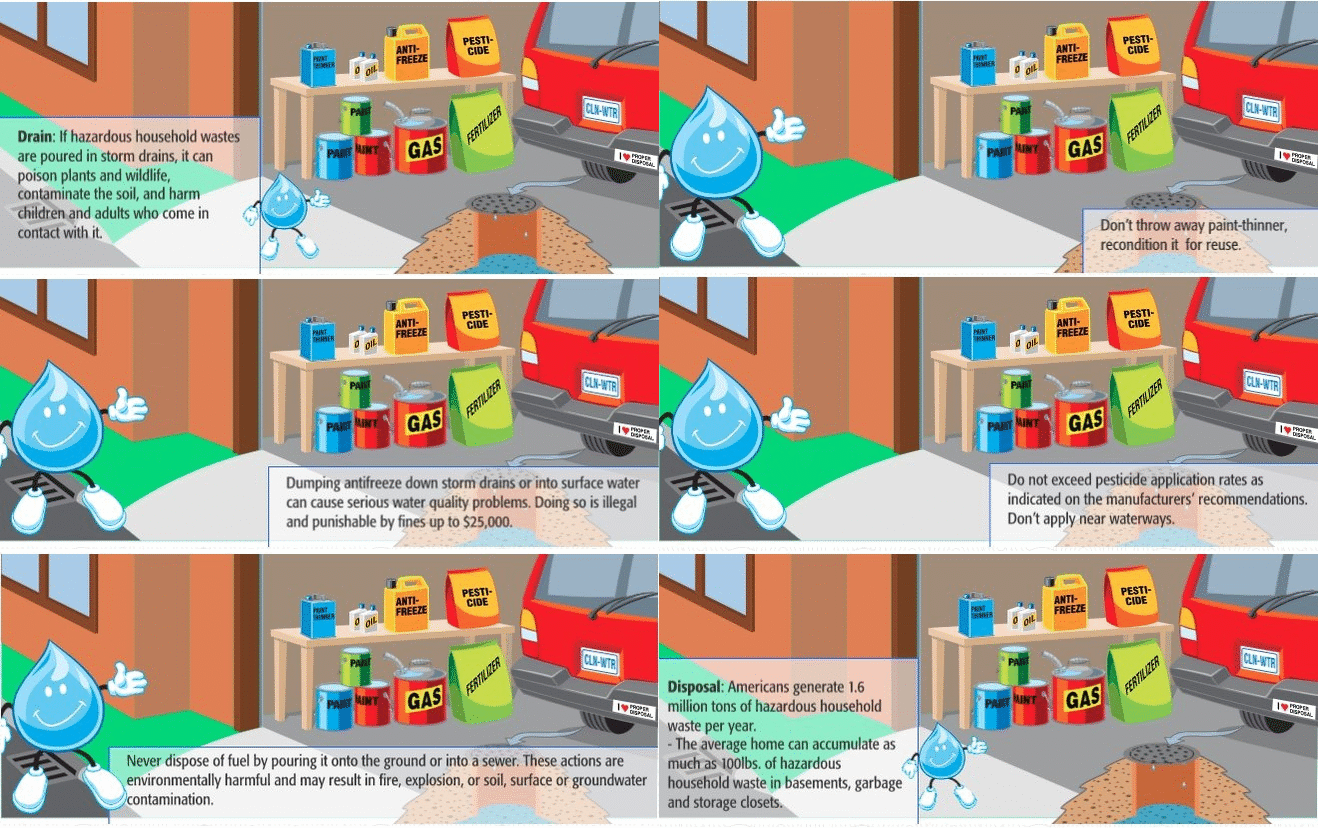
If hazardous household wastes are poured in storm drains, it can poison plants and wildlife, contaminate the soil, and harm children and adults who come in contact with it.
Sewer
Do not dump your hazardous household wastes! Contact the hazardous household waste hotline at 269.373.5211 for proper disposal.
Paint Thinner
Don't throw away paint thinner. Recondition it for re-use.
Oil
A one quart can of oil can contaminate 250,000 gallons of water.
AntiFreeze
Dumping antifreeze down storm drains or into surface water can cause serious water quality problems. Doing so is illegal and punishable by fines up to $25,000.
Pesticides
Do not exceed pesticide application rates as indicated on the manufacturers' recommendations. Don't apply near waterways.
Oil-based Paint
Never put oil-based paint in the trash or pour down the sink! It can lead to toxic environmental pollution and public health hazards.
Fuel
Never dispose of fuel by pouring it onto the ground or into a sewer. These actions are environmentally harmful and may result in fire, explosion, or soil, surface or groundwater contamination.
Fertilizer
Fertilizers promote algae growth in our waterways, so do not fertilize if rain is forecasted!
Disposal
Americans generate 1.6 million tons of hazardous household waste per year. The average home can accumulate as much as 100lbs. of hazardous household waste in basements, garbage and storage closets.
Resources
City of Kalamazoo - Protect Your Water has the following to assist you in educating yourself and others.