Wastewater
About The City of Kalamazoo Water Reclamation Plant
The Kalamazoo sanitary sewer collection system includes more than 900 miles of pipe, ranging from 4-78 inches in diameter
To inquire further, please fill out our contact form or call us at (269) 337-8000.
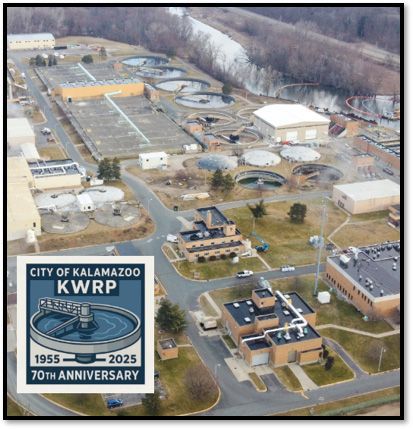
The City of Kalamazoo is Celebrating 70 Years of Wastewater Treatment!
We're grateful for the strong partnerships that help KWRP deliver high - quality wastewater treatment!
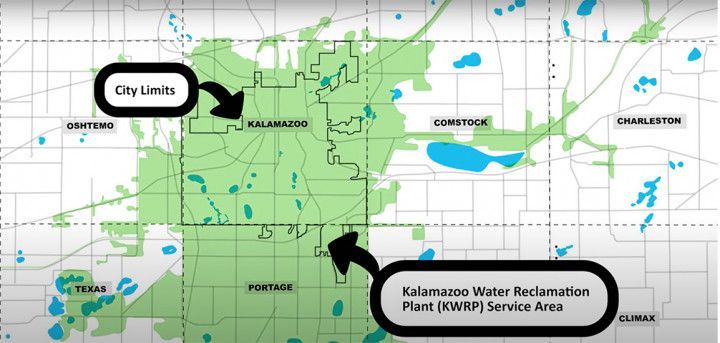
Key partners include:
- Oshtemo Township
- Pavilion Township
- Schoolcraft Township
- Texas Township
- City of Galesburg
- City of Parchment
- City of Augusta
- Charleston Township
- Cooper Township
- Kalamazoo Township
- Village of Vicksburg
- Comstock Township
- City of Kalamazoo
- City of Portage
- Village of Mattawan
- South County
- Gull Lake Sewer Authority:
- Barry Township
- Prairieville Township
- Richland Township
- Village of Richland
- Ross Township
Travel Through Time With Us and Learn more about what KWRP is doing to reduce odors!
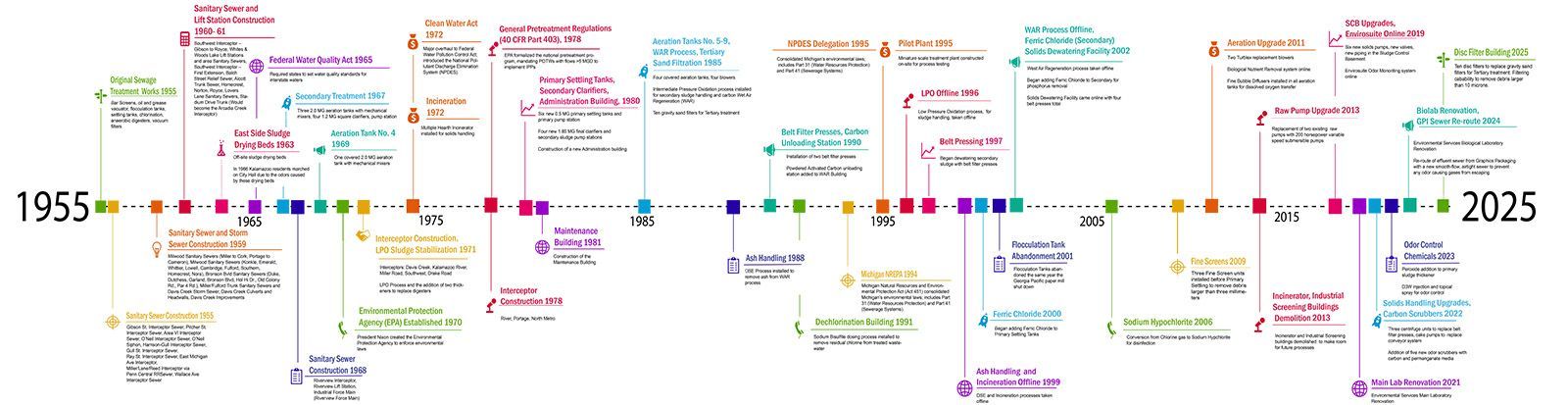
1955 Original Sewage Treatment Works
Bar Screens, oil and grease vacuator, flocculation tanks, settling tanks, chlorination, anaerobic digesters, vacuum filters
1955 Sanitary Sewer Construction
Gibson St. Interceptor Sewer, Pitcher St. Interceptor Sewer, Area VI Interceptor Sewer, O’Neil Interceptor Sewer, O’Neil Siphon, Harrison-Gull Interceptor Sewer, Gull St. Interceptor Sewer, Ray St. Interceptor Sewer, East Michigan Ave Interceptor, Miller/Lane/Reed Interceptor via Penn Central RRSewer, Wallace Ave Interceptor Sewer
1959 Sanitary Sewer and Storm Sewer Construction
Milwood Sanitary Sewers (Miller to Cork, Portage to Cameron), Milwood Sanitary Sewers (Konkle, Emerald, Whittier, Lowell, Cambridge, Fulford, Southern, Homecrest, Nora), Bronson Bvld Sanitary Sewers (Duke, Dutchess, Garland, Bronson Blvd, Hol Hi Dr., Old Colony Rd., Par 4 Rd.), Miller/Fulford Trunk Sanitary Sewers and Davis Creek Storm Sewer, Davis Creek Culverts and Headwalls, Davis Creek Improvements
1960- 61 Sanitary Sewer and Lift Station Construction
Southwest Interceptor – Gibson to Royce, Whites & Woods Lake Lift Stations and area Sanitary Sewers, Southwest Interceptor – First Extension, Balch Street Relief Sewer, Alcott Trunk Sewer, Homecrest, Norton, Royce, Lovers Lane Sanitary Sewers, Stadium Drive Trunk (Would become the Arcadia Creek Interceptor)
1963 East Side Sludge Drying Beds
Off-site sludge drying beds In 1966 Kalamazoo residents marched on City Hall due to the odors caused by these drying beds
1965 Federal Water Quality Act
Required states to set water quality standards for interstate waters
1967 Secondary Treatment
Three 2.0 MG aeration tanks with mechanical mixers, four 1.2 MG square clarifiers, pump station
1968 Sanitary Sewer Construction
Riverview Interceptor, Riverview Lift Station, Industrial Force Main (Riverview Force Main)
1969 Aeration Tank No. 4
One covered 2.0 MG aeration tank with mechanical mixers
1970 Environmental Protection Agency (EPA) Established
President Nixon created the Environmental Protection Agency to enforce environmental laws
1971 Interceptor Construction, LPO Sludge Stabilization
Interceptors: Davis Creek, Kalamazoo River, Miller Road, Southwest, Drake Road LPO Process and the addition of two thickeners to replace digesters
1972 Clean Water Act
Major overhaul to Federal Water Pollution Control Act; introduced the National Pollutant Discharge Elimination System (NPDES).
1972 Incineration
Multiple Hearth Incinerator installed for solids handling
1978 General Pretreatment Regulations (40 CFR Part 403)
EPA formalized the national pretreatment program, mandating POTWs with flows >5 MGD to implement IPPs
1978 Interceptor Construction
River, Portage, North Metro
1980 Primary Settling Tanks, Secondary Clarifiers, Administration Building
- Six new 0.5 MG primary settling tanks and primary pump station
- Four new 1.85 MG final clarifiers and secondary sludge pump stations
- Construction of a new Administration building
1981 Maintenance Building
Construction of the Maintenance Building
1985 Aeration Tanks No. 5-9, WAR Process, Tertiary Sand Filtration
Four covered aeration tanks, four blowers Intermediate Pressure Oxidation process installed for secondary sludge handling and carbon Wet Air Regeneration (WAR) Ten gravity sand filters for Tertiary treatment
1988 Ash Handling
DSE Process installed to remove ash from WAR process
1990 Belt Filter Presses, Carbon Unloading Station
- Installation of two belt filter presses
- Powdered Activated Carbon unloading station added to WAR Building
1991 Dechlorination Building
Sodium Bisulfite dosing process installed to remove residual chlorine from treated waste- water
1994 Michigan NREPA
Michigan Natural Resources and Environmental Protection Act (Act 451) consolidated Michigan's environmental laws; includes Part 31 (Water Resources Protection) and Part 41 (Sewerage Systems).
1995 Pilot Plant
Miniature scale treatment plant constructed on-site for process testing
1996 LPO Offline
Low Pressure Oxidation process, for sludge handling, taken offline.
1997 Belt Pressing
Began dewatering secondary sludge with belt filter presses
1999 Ash Handling and Incineration Offline
DSE and Incineration processes taken offline.
2000 Ferric Chloride
Began adding Ferric Chloride to Primary Settling Tanks
2001 Flocculation Tank Abandonment
Flocculation Tanks abandoned the same year the Georgia Pacific paper mill shut down
2002 WAR Process Offline, Ferric Chloride (Secondary) Solids Dewatering Facility 2002
- West Air Regeneration process taken offline
- Began adding Ferric Chloride to Secondary for phosphorus removal
- Solids Dewatering Facility came online with four belt presses total
2006 Sodium Hypochlorite
Conversion from Chlorine gas to Sodium Hypochlorite for disinfection
2009 Fine Screens
Three Fine Screen units installed before Primary Settling to remove debris larger than three millimeters
2011 Aeration Upgrade
- Two Turblex replacement blowers
- Biological Nutrient Removal system online
- Fine Bubble Diffusers installed in all aeration tanks for dissolved oxygen transfer
2013 Raw Pump Upgrade
Replacement of two existing raw pumps with 200 horsepower variable speed submersible pumps
2013 Incinerator, Industrial Screening Buildings Demolition
Incinerator and Industrial Screening buildings demolished to make room for future processes
2019 SCB Upgrades, Envirosuite Online
- Six new solids pumps, new valves, new piping in the Sludge Control Basement
- Envirosuite Odor Monitoring system online
2021 Main Lab Renovation
Environmental Services Main Laboratory Renovation
2022 Solids Handling Upgrades, Carbon Scrubbers
- Three centrifuge units to replace belt filter presses, cake pumps to replace conveyor system
- Addition of five new odor scrubbers with carbon and permanganate media
2023 Odor Control Chemicals 2023
- Peroxide addition to primary sludge thickener
- D3W injection and topical spray for odor control
2024 Biolab Renovation, GPI Sewer Re-route
- Environmental Services Biological Laboratory Renovation
- Re-route of effluent sewer from Graphics Packaging with a new smooth-flow, airtight sewer to prevent any odor causing gases from escaping
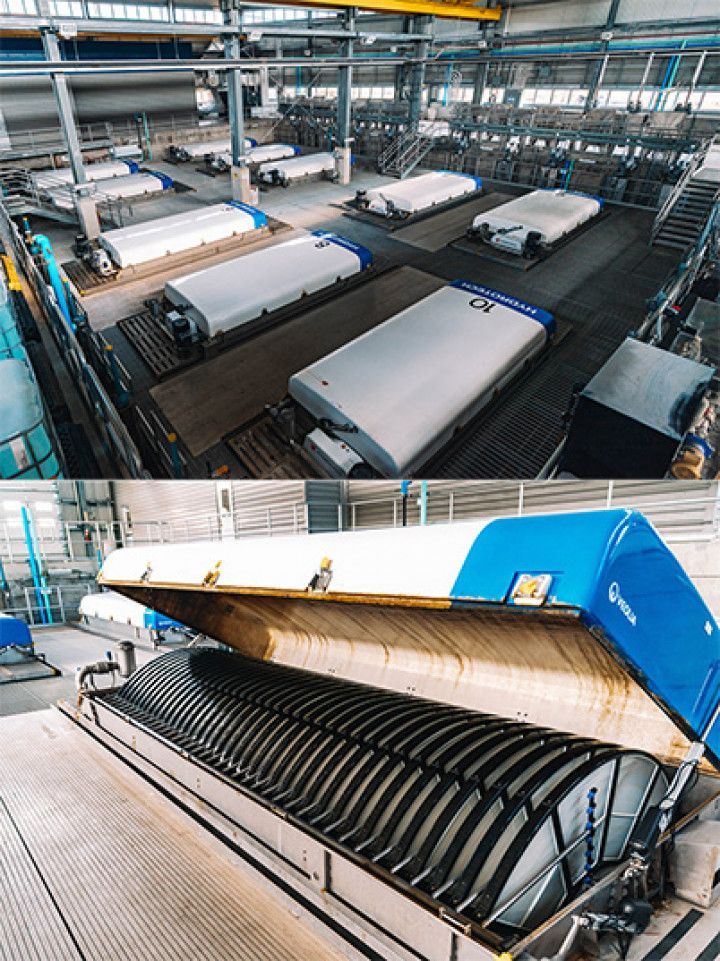
2025 Disc Filtering Building
Ten disc filters to replace gravity sand filters for Tertiary treatment. Filtering capability to remove debris larger than 10 microns.
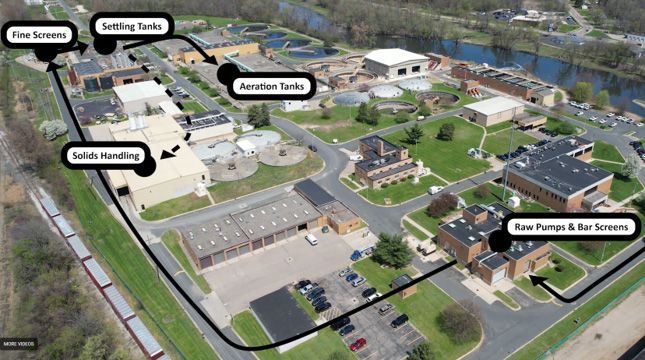
How does wastewater get to the plant?
Wastewater from homes, businesses, and industries flows generally by gravity, to the Kalamazoo Water Reclamation Plant (KWRP). Where terrain limits gravity flow, 66 lift stations pump wastewater to higher elevations, ensuring continuous conveyance to the treatment facility.
Supervisory Control and Data Acquisition (SCADA)
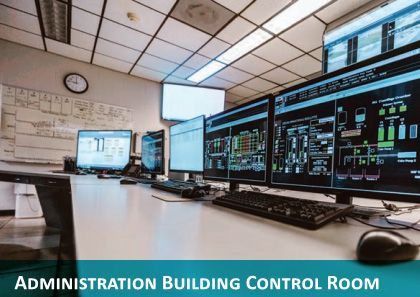
The Kalamazoo Water Reclamation Plant (KWRP) uses a high-tech system called Supervisory Control and Data Acquisition (SCADA) to help monitor and manage operations.
SCADA acts as the plant's "central nervous system," continuously collecting and displaying data from throughout the facility and from remote wastewater lift stations across the service area.
This real-time information allows KWRP's state-licensed Treatment Operations Supervisors to keep a close eye on how the plant is running and make immediate adjustments as needed.
Screening
Why Screening First?
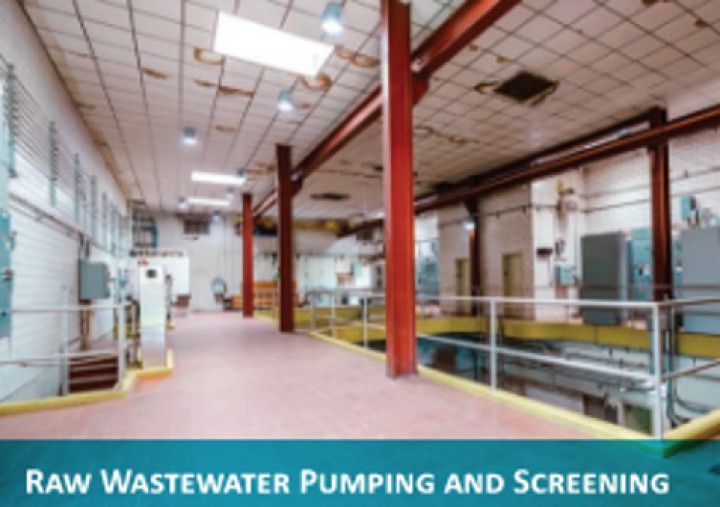
Wastewater starts with a screening step to catch and remove big junk like sticks, plastics, rags, and other trash. This protects pumps and machines from damage, stops clogs in pipes, and keeps the whole treatment running smoothly.
Pumping to Primary Treatment:
After screening, strong pumps push the cleaned-up water to the next stage. These big pumps handle huge amounts of water steadily, keeping everything flowing at the right speed and pressure.
Smart Automation:
Computers (watched by staff) control the pumps to keep the flow even and reliable, so water moves consistently to the treatment areas without surprises.
Primary Treatment
Step 1: Grit Removal
Wastewater flows into two grit tanks where heavy sand, gravel, and grit sink to the bottom. Air is bubbled in to create a swirling motion, keeping lighter organic stuff (like food bits) from settling with the grit. This protects pipes and equipment from wear.
Step 2: Fine Screening
Next, the water passes through three fine screens that catch smaller floating trash bigger than 3mm (about the size of a small pea). This removes extra debris that bigger screens missed.
Step 3: Sedimentation
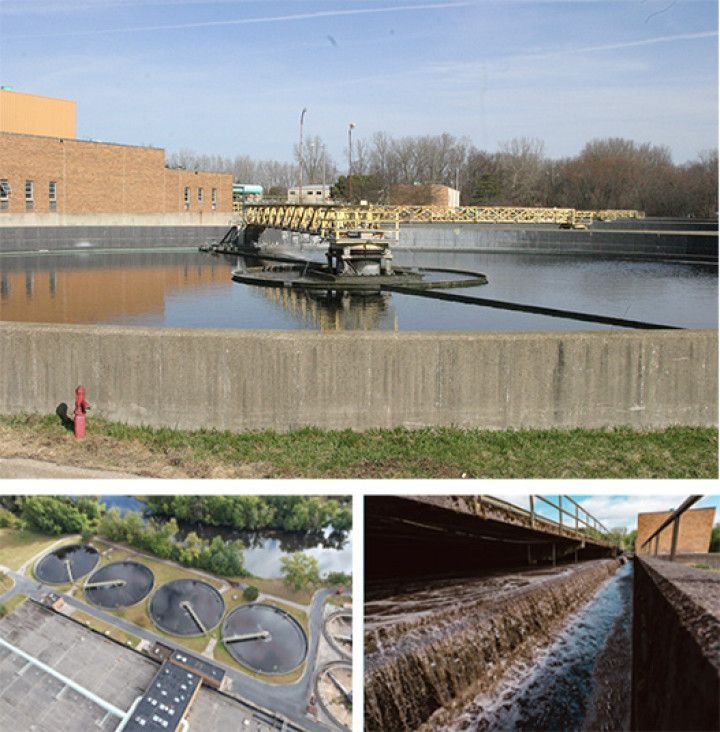
The water then goes to one of six large tanks where solids sink to the bottom (called sludge) and are scraped to one end, then pumped away for further treatment. Meanwhile, fats, oils, and greases (FOG) float to the top, get skimmed off, and sent to solids handling too.
Special PAC Treatment
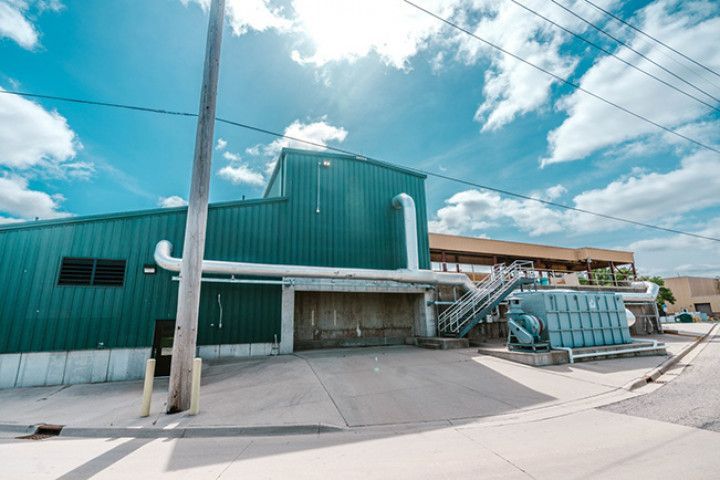
The KWRP uses powdered activated carbon (PAC)-a super-absorbent powder-added before secondary treatment. This innovative step soaks up tough pollutants from industries (like chemicals or dyes) that other plants struggle with, without needing extra cleanup beforehand.
Secondary Treatment
Biological Treatment Basics:
After PAC, water moves to secondary treatment, where tiny microbes (like bacteria) eat up dissolved organics and tiny particles. It's like a natural cleanup crew breaking down waste into harmless stuff!
Aeration Tanks in Action:
Nine huge tanks (each holding ~2 million gallons) mix air into the water to feed the microbes. About 500,000 pounds of "biomass" (the microbe team) works here, treating the water for around 8 hours to purify it thoroughly before the next steps.
Final Clarification Tanks
Settling Out the Good Bugs:
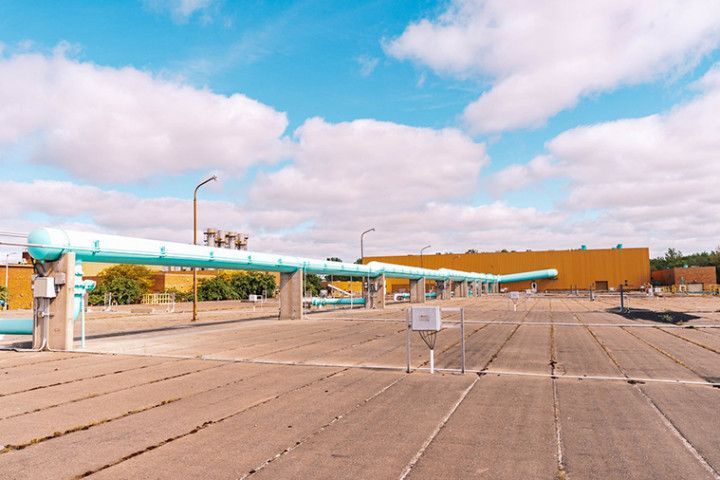
After aeration, water flows into clarifiers (settling tanks) where the helpful bacteria and biomass sink to the bottom. Most of this "sludge" is recycled back to the aeration tanks to keep the microbe team strong.
Waste Management:
A small amount of excess sludge is sent to solids treatment to control the population and prevent overload.
Next Stop:
The clearer water on top moves to tertiary treatment for final polishing before safe release!
Tertiary Treatment
Disc Filters:
Ten big disc filters act like fine sieves, trapping tiny leftover solids, microplastics, and carbon bits using a 10-micron mesh (super fine, like coffee filter level). Backwashing (rinsing backward) cleans the filters by flushing out trapped junk.
Removing Pathogens
Disinfection Step:
Filtered water gets treated with chemicals (like chlorine) to kill harmful germs and bacteria that could cause disease.
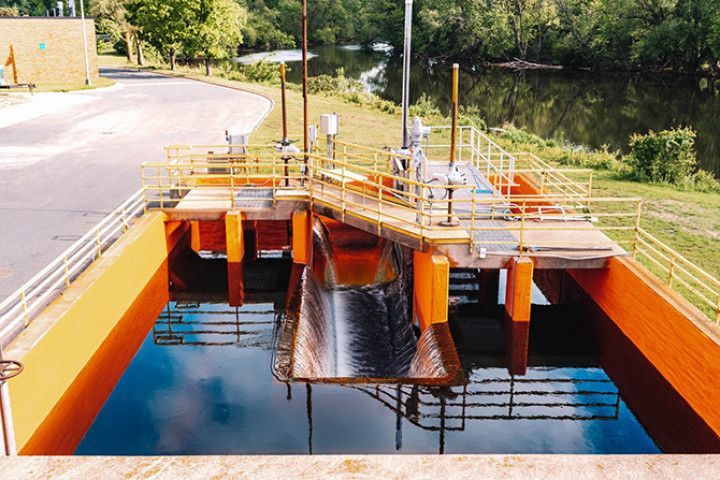
Safe Release:
Before dumping into the Kalamazoo River, the water is dechlorinated (chlorine removed) to protect river life-ensuring the final effluent is clean and safe for the environment.
Solids Handling Facility
Dewatering with Centrifuges:
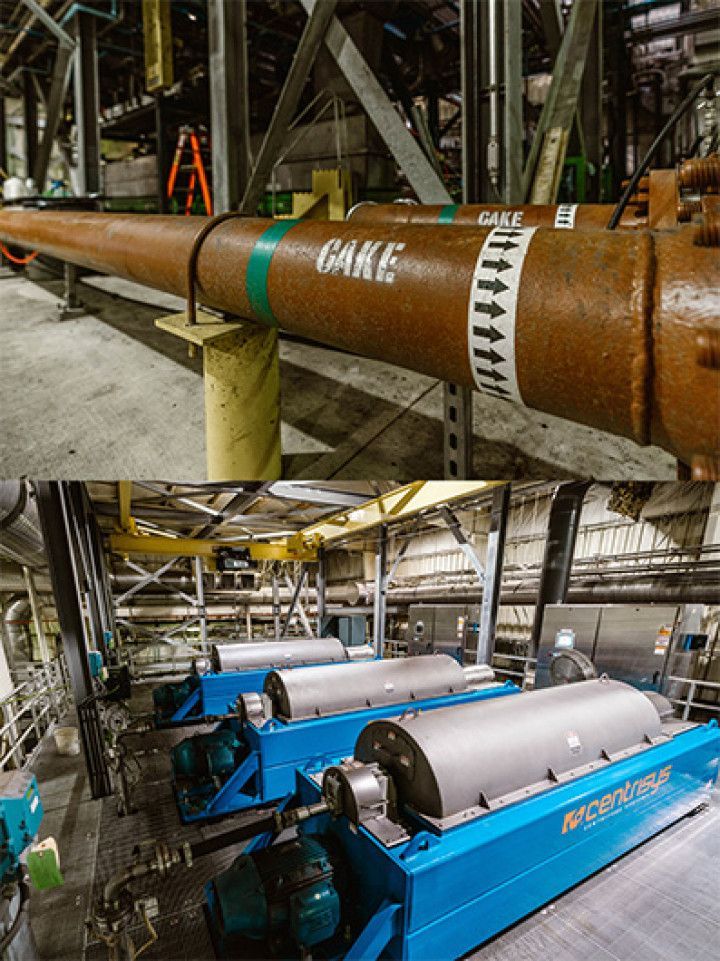
The facility uses three fast-spinning centrifuges to squeeze water out of mixed sludge from primary and secondary treatment. The spinning force (centrifugal) separates liquids from solids, turning watery sludge into thicker "cake."
Prep with Polymers:
Before spinning, a special chemical (polymer) is added to clump the sludge particles together, making it easier to remove water and boosting the process efficiency.
Storage and Transport:
The dewatered cake goes into a pump system, then one of three storage bunkers. When ready, a front-end loader scoops it into trucks for hauling to a landfill.