Kalamazoo Stormwater Working Group
About KSWG
English Version
Topic 1:
Kalamazoo Watershed
Public Responsibility & Stewardship
Mission Statement
The Kalamazoo Stormwater Working Group (KSWG) is a collaborative effort of outreach and education for our interconnected Municipal Separate Storm Sewer Systems (or MS4s) in the Kalamazoo County area.
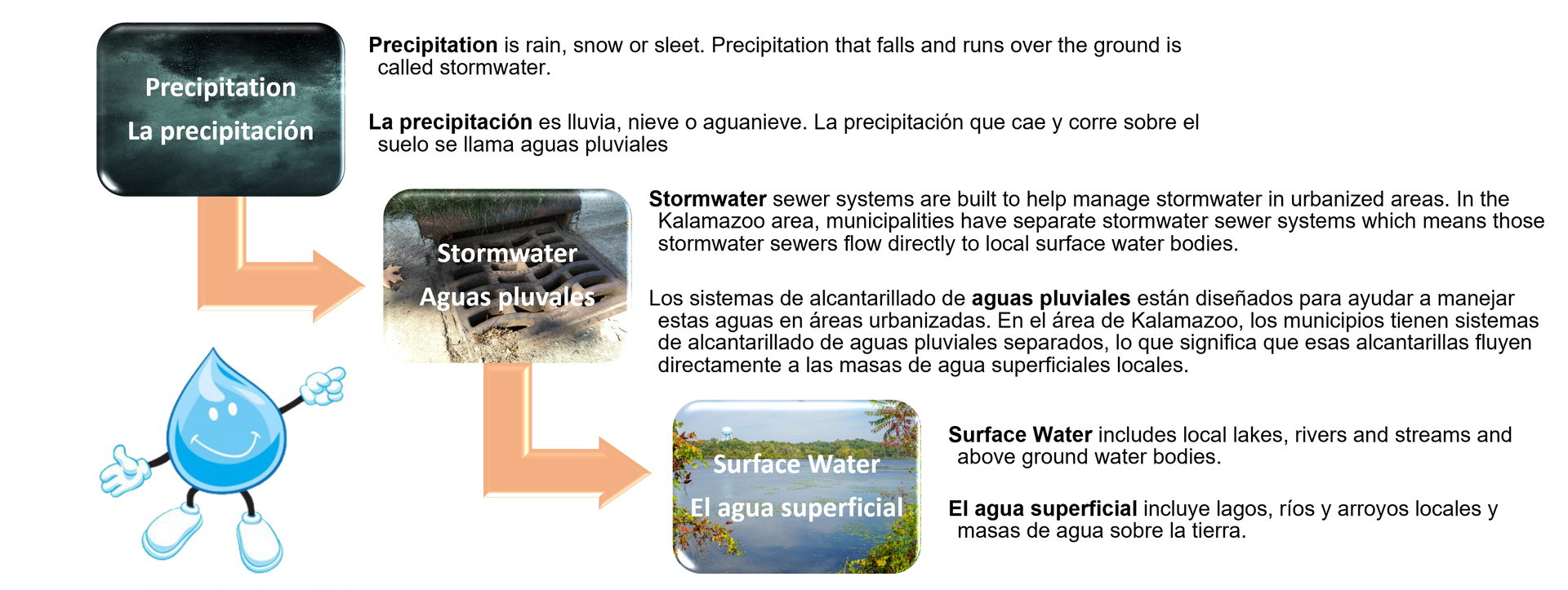
Rain falls and snow melts across hard and impervious surfaces that do not allow water to soak into the ground. The water flows to storm sewers or catch basins which direct it to a natural surface water body such as a wetland, river, pond or lake. Stormwater runoff carries salts, grass clippings, sediment, fertilizer, oils, pet waste, and other material left on driveways and sidewalks into the catch basins, and unfortunately, they eventually drain to our natural water bodies.
KSWG partners work together to protect against harmful discharges to the Kalamazoo River and its tributaries.
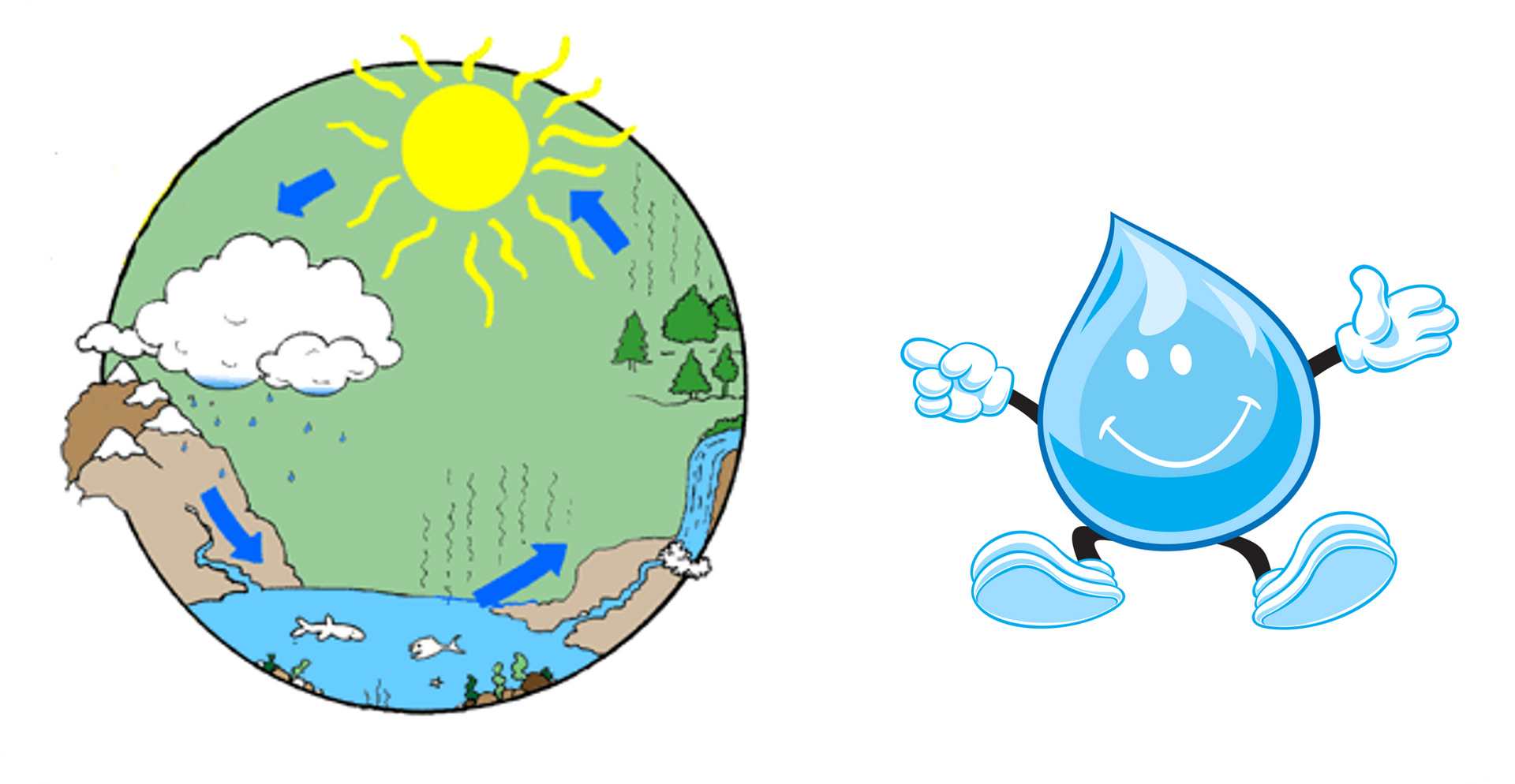
Water is constantly moving through the water cycle all around us. It is
important to remember that human activities affect the water cycle in various
ways:
- The removal of ground water & surface water for drinking water
- Water use for crop irrigation
- Water use for industrial processes
- Damming rivers to generate power or influence water levels
- Creating impermeable surfaces, like roads and parking lots
- Cutting down trees and removing vegetation
From the Clouds to the Surface
Our Watershed is part of the Water Cycle
A Watershed is an area of land that drains to a single surface water body. Kalamazoo and the surrounding area are part of the Kalamazoo River watershed. In our watershed, creeks, storm sewers, and over-land flow all eventually drain into the lowest point, the Kalamazoo River.
To understand how we can care for our watershed, let’s take a look at how we interact with the water around us in the human water cycle:
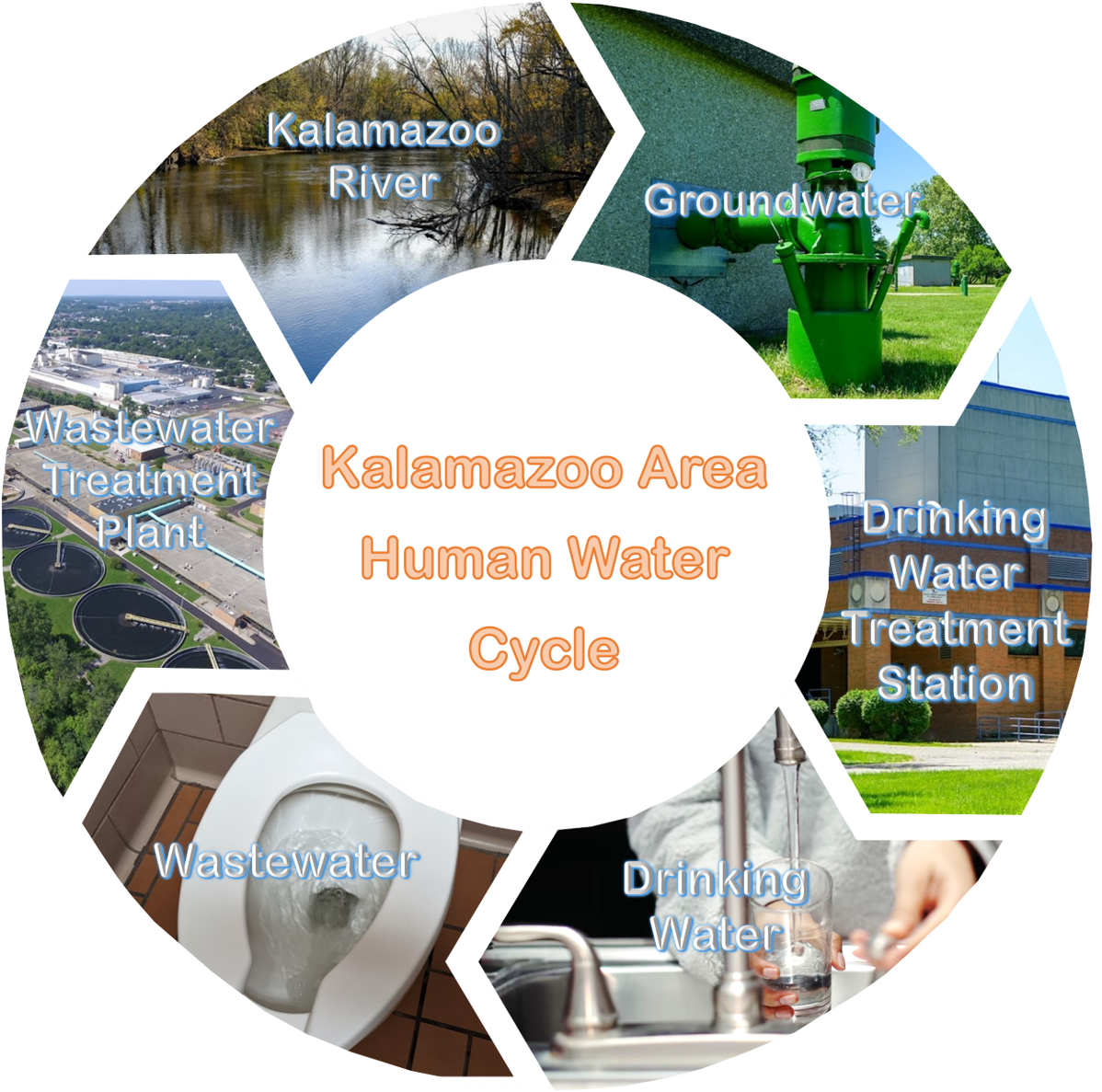
About 25% of stormwater infiltrates the ground to become groundwater. Groundwater is water that is held in the ground between particles of sand and gravel. In the Kalamazoo area, we get our drinking water supply comes from groundwater. It is pumped out of the ground at water pumping stations.
This groundwater is then treated at a Drinking Water Treatment Station, then delivered to our homes and businesses.
Drinking Water is treated and tested to ensure it is safe.
After the water is used by people or processes, it becomes Wastewater. This wastewater flows through the sanitary sewer collection system to the wastewater treatment plant.
Wastewater Treatment Plants are designed to remove contaminants before returning the water to the Kalamazoo River.
The Kalamazoo River receives flow from point-sources, like wastewater treatment plants, and stormwater runoff. It is the receiving water body for the Kalamazoo Watershed.
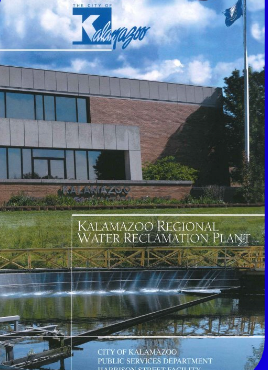
KALAMAZOO WATER RECLAMATION PLANT
How can you be a good steward of the Kalamazoo Watershed?
FOR MORE TIPS VISIT:
HOW YOU CANHELP
Households, industry, and other human activities all have the potential to become sources of contamination to the water cycle and our watershed. Here are some things you can do to help:
DO
- Plant native vegetation to help soak up and filter stormwater.
- Dispose of chemicals, oils, and paints at the Household Hazardous Waste Center.
- Wash your car at a car washing facility or on a permeable surface.
- Participate in public river clean-up events.
DON’T
- Leave pet waste on the ground outside.
- Put anything in a storm drain that isn’t rainwater.
LEARN
- Learn about the water cycle, watershed, and ecosystem around you.
- Consider the daily impacts humans have on water quality.
- Help educate others on stormwater pollution prevention.

Trees play an important role in the water cycle by removing certain pollutants, stabilizing soils, absorbing rainwater and preventing erosion.
Visit ReLeaf Michigan for more information.
This month’s stormwater topic is brought to you by KSWG partner:

The City of Kalamazoo
The City’s Michigan National Pollutant Discharge Elimination System (NPDES) Permit allows for the non-point source discharges of stormwater to the local surface water bodies. Our goals seek to improve water quality, provide more efficient development guidelines, and to provide controls to minimize localized flooding.
Topic 1: Promote Public Responsibility and Stewardship of the Kalamazoo Watershed
Our Partners
Parchement
Mr. Kindleberger and a committee of citizens planned the riverfront community of Parchment, a model village carved out of the northern part of Kalamazoo Township.

Galesburg
The City of Galesburg adjoins the Kalamazoo River and Morrow Lake and is a mid-sized city between Detroit and Chicago.

Vicksburg
Vicksburg is the Village with a Vision. The Village of Vicksburg is committed to ensuring that stormwater runoff from its roadways and facilities complies with all federal and state environmental regulatory requirements.

Western Michigan University (WMU)
"Re-think Smart." It's more than book smarts. More important than IQ. It's the pursuit of purpose, daring to think differently, and not being afraid to question answers. We call it Rethink Smart.

Kalamazoo Valley Community College (KVCC)
Kalamazoo Valley Community College (KVCC) is a public community college in Kalamazoo established in 1966 and enrolls about 10,000 students. KVCC is committed to preserving our local waterways in our downtown campus with green infrastructure and at the Texas Township campus adjoining the West fork of the Portage Creek.

Road Commission of Kalamazoo (RCKC)
The goal of the Board of County Road Commissioners of the County of Kalamazoo is using our expertise, energy and funds to provide the safest and most convenient road system possible, and to contribute to economic development and high quality of life throughout the county.

Kalamazoo County Drain Commissioners Office
Our Mission is to provide for the health, safety and welfare of Kalamazoo County citizens, the protection of surface waters and the environment, and to promote the long-term environmental sustainability of Kalamazoo County by providing storm water management, flood control, soil erosion controls and education.
City of Portage
To the City of Portage, protecting its natural treasures is an investment in the health, growth and stability of the community without being a burden on city resources. The city continuously engages its citizens to address current challenges and develop a future vision for our community - and ultimately ensure the city remains A Natural Place to Move.

City of Kalamazoo
The City's Michigan National Pollutant Discharge Elimination System (NPDES) Permit allows for the non-point source discharges of stormwater to the local surface water bodies. Our goals seek to improve water quality, provide more efficient development guidelines, and to provide controls to minimize localized flooding.
Kalamazoo River Watershed Council
The Kalamazoo River Watershed Council's mission and vision come from a desire to protect, preserve, and promote the Kalamazoo River and its tributaries for current area residents and future generations. To restore and protect the health of the Kalamazoo River, its tributaries, and its watershed by collaborating with the community, government agencies, local officials, and businesses.
Kalamazoo Public Schools (KPS)
At Kalamazoo Public Schools (KPS) it is our mission to nurture the dreams of all students and empower all students to contribute to a better world. KPS is a vibrant, progressive district and home to "The Kalamazoo Promise", a unique scholarship that provides up to 100 percent, post-secondary tuition and fee assistance.

Spanish Version
Tema 1:
Cuenca hidrográfica de Kalamazoo
Responsabilidad Pública y Mayordomía
Estado de la Misión
El Grupo de trabajo de aguas pluviales de Kalamazoo (KSWG) es un esfuerzo colaborativo de divulgación y educación para nuestros sistemas de alcantarillado pluvial separados municipales interconectados (o MS4) en el área del condado de Kalamazoo. La lluvia cae y la nieve se derrite sobre superficies duras e impermeables que no permiten que el agua penetre en el suelo. El agua fluye hacia las desagües pluviales que la dirigen a un cuerpo de agua superficial natural, como un humedal, un río, un estanque o un lago. La escorrentía de aguas pluviales transporta sales, recortes de césped, sedimentos, fertilizantes, aceites, desechos de mascotas y otros materiales que quedan en los caminos de entrada y las aceras hacia los desagües pluviales y, desafortunadamente, eventualmente se drena en nuestros cuerpos de agua natural. Los socios de KSWG trabajan juntos para proteger el río Kalamazoo y sus afluentes de descargas dañinas.
El agua se mueve constantemente a través del ciclo del agua a nuestro alrededor. Es importante recordar que las actividades humanas afectan el ciclo del agua de varias maneras:
- La eliminación de aguas subterráneas y superficiales para agua potable Water use for crop irrigation
- Uso del agua para el riego de cultivos
- Uso del agua para procesos industriales Represar ríos para generar energía o influir en los niveles de agua
- Crear superficies impermeables, como carreteras y estacionamientos
- Cortar árboles y eliminar la vegetación
De las nubes a la tierra
Nuestra Cuenca es parte del Ciclo del Agua
Una cuenca hidrográfica es un área de tierra que drena a un solo cuerpo de agua superficial. Kalamazoo y sus alrededores son parte de la cuenca del río Kalamazoo. En nuestra cuenca, los arroyos, las alcantarillas pluviales y el flujo de agua de la tierra eventualmente drenan en el punto más bajo, el río Kalamazoo.
Para entender cómo podemos cuidar nuestra cuenca, veamos cómo interactuamos con el agua que nos rodea en el ciclo del agua humana:
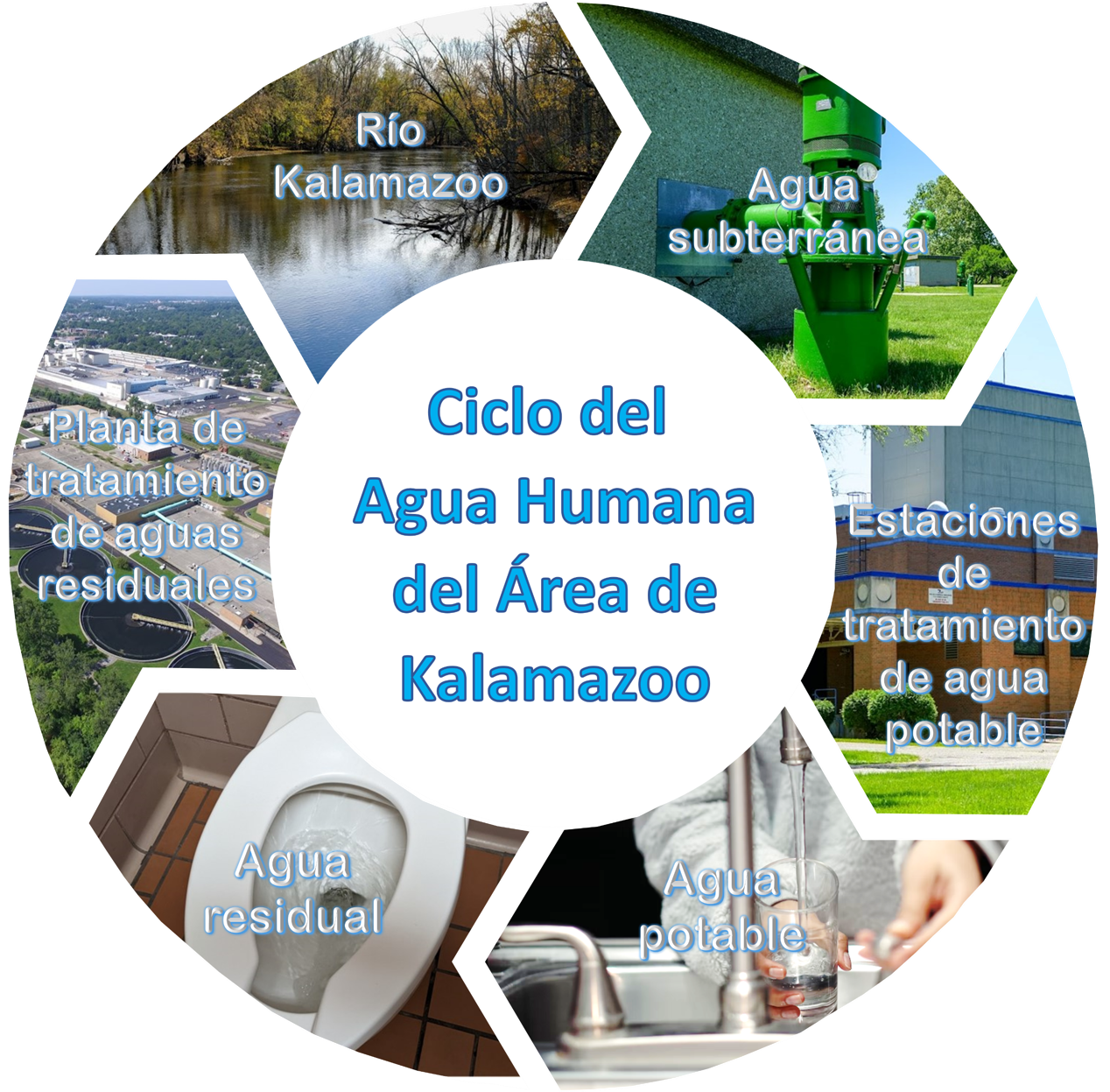
Alrededor del 25% de las aguas pluviales se infiltran en el suelo para convertirse en aguas subterráneas. El agua subterránea es agua que se mantiene en el suelo entre partículas de arena y grava. En el área de Kalamazoo, obtenemos nuestra agua potable de aguas subterráneas. Se bombea fuera del suelo en estaciones de bombeo de agua..
Esta agua subterránea se trata en una estación de tratamiento de agua potable y luego se entrega a nuestros hogares y negocios.
El agua potable es tratada y probada para garantizar que sea segura.
Después de que el agua es utilizada por personas o procesos, se convierte en aguas residuales. Estas aguas residuales fluyen a través del sistema de recolección de alcantarillado sanitario a la planta de tratamiento de aguas residuales.
Las plantas de tratamiento de aguas residuales están diseñadas para eliminar los contaminantes antes de devolver el agua al río Kalamazoo.
El río Kalamazoo recibe flujo de fuentes puntuales, como plantas de tratamiento de aguas residuales y escorrentía de aguas pluviales. Es el cuerpo de agua receptor de la cuenca de Kalamazoo.
¿Cómo puedes ser un buen administrador de la cuenca de Kalamazoo?
Los hogares, la industria y otras actividades humanas tienen el potencial de convertirse en fuentes de contaminación para el ciclo del agua y nuestra cuenca. Aquí hay algunas cosas que puede hacer para ayudar:
HACER
- Plante vegetación nativa para ayudar a absorber y filtrar las aguas pluviales.
- Deseche los productos químicos, aceites y pinturas en el Centro de Desechos Domésticos Peligrosos.
- Lave su automóvil en una instalación de lavado de autos o en una superficie permeable.
- Participar en eventos públicos de limpieza de ríos.
NO
- Deje los desechos de mascotas en el suelo afuera.
- Ponga cualquier cosa en un desagüe pluvial que no sea agua de lluvia.
APRENDER
- Aprenda sobre el ciclo del agua, la cuenca hidrográfica y el ecosistema que lo rodea.
- Considere los impactos diarios que los humanos tienen en la calidad del agua.
- Ayudar a educar a otros sobre la prevención de la contaminación de las aguas pluviales.
El tema de las aguas pluviales de este mes es presentado por el socio de KSWG:
La ciudad de Kalamazoo
El Permiso del Sistema Nacional de Eliminación de Descargas de Contaminantes (NPDES) de Michigan de la Ciudad permite las descargas de aguas pluviales de fuentes no puntuales a los cuerpos de agua superficiales locales. Nuestros objetivos buscan mejorar la calidad del agua, proporcionar guías de desarrollo más eficientes y proporcionar controles para minimizar las inundaciones localizadas.
Tema 1: Promover la responsabilidad pública y la administración de la cuenca de Kalamazoo
Resources
City of Kalamazoo - Protect Your Water has the following to assist you in educating yourself and others.